


College of Science Media Center  


Featured Stories

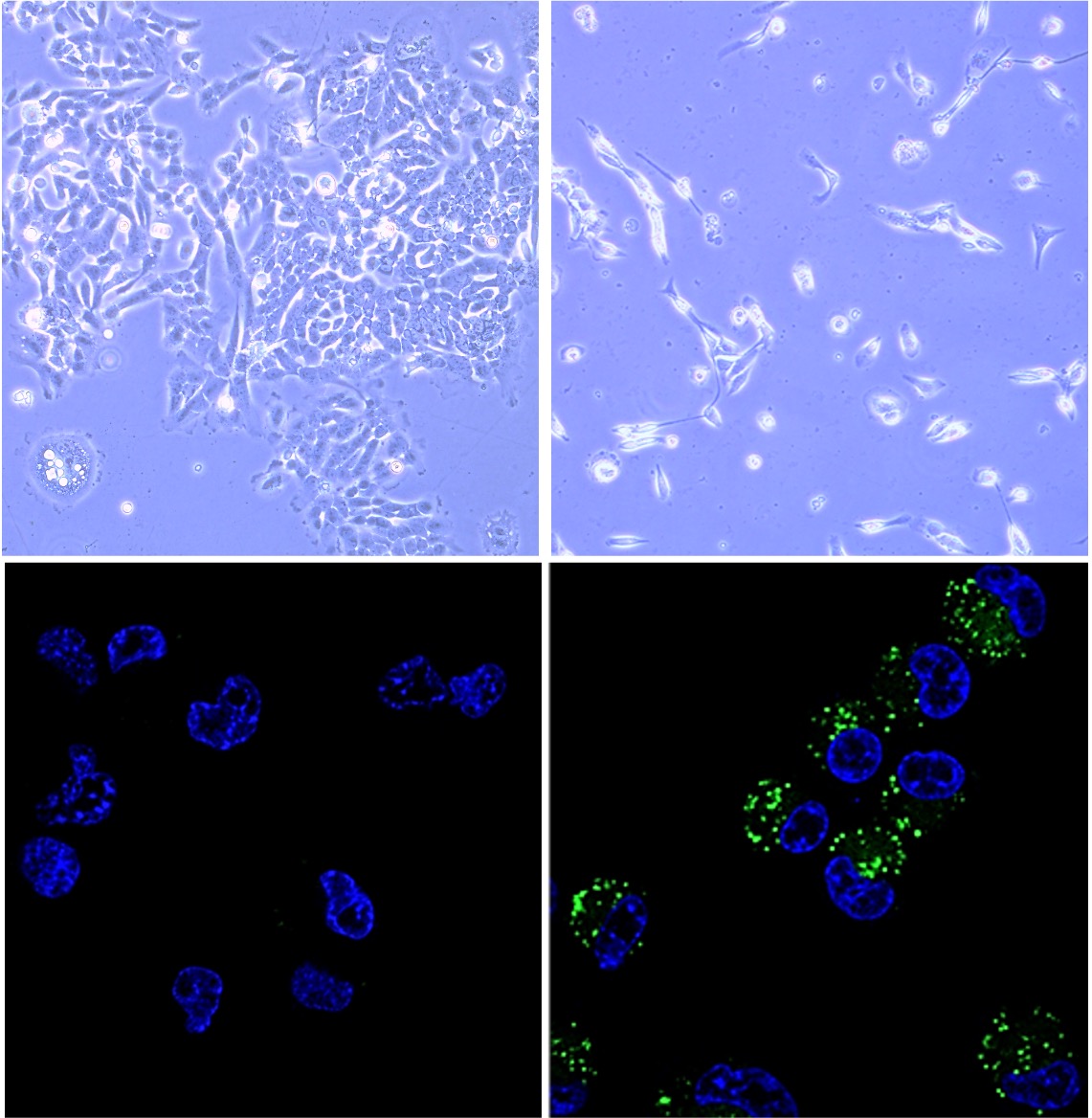
Assistant Professor Chen Chen of LSU’s Department of Biological Sciences has received a $2.23 million NIH R01 award to investigate how Staphylococcus aureus interacts with the human immune system to persist in the body and, under certain conditions, cause severe disease. Using advanced molecular and animal models, her research focuses on how the bacterium modulates immune responses—particularly neutrophil behavior—to balance colonization and infection. The findings may lead to new therapeutic strategies that reduce lung inflammation and improve outcomes for patients with pneumonia, including infections caused by antibiotic-resistant strains.

Boyd Professor Susanne C. Brenner has achieved an extraordinary trio of honors: receiving the prestigious Blaise Pascal Medal, being elected to the European Academy of Sciences, and being invited to speak at the 2026 International Congress of Mathematicians—the first LSU faculty member to do so since 1970. These recognitions place Brenner among the world’s leading mathematical scientists and highlight the global impact of her research.

The LSU Mass Spectrometry Facility (MSF) and Nuclear Magnetic Resonance (NMR) Facility, key research resources at LSU, are expanding their capabilities thanks to a $69,199 enhancement grant from the Louisiana Board of Regents. This funding will improve sample preparation and add variable-temperature features for NMR, streamlining workflows and enhancing research quality.

Research news

A recent study led by LSU Assistant Professor Jiaqi Tan, published in Nature Communications, shows how competition between species alters how plants and animals grow, reproduce, and behave. By examining results from hundreds of studies worldwide, the researchers found that as competition increases, average performance often declines, but individuals within a species become more varied and flexible. These findings help scientists better understand--and predict--how ecosystems will respond to challenges like climate change, shrinking habitats, and invasive species.

Researchers from Ohio State University and LSU have shown that high-harmonic spectroscopy (HHS)—a laser technique fast enough to track electrons on attosecond timescales—can finally be used to study liquids. In a study published in PNAS, the team found that fluorobenzene forms a surprising local structure when mixed with methanol, dramatically changing the emitted light. The work opens a new window into ultrafast interactions inside liquids, where many essential chemical and biological processes take place.

As climate change drives ocean acidification, most corals struggle to survive–but Porites panamensis in Mexico's Gulf of California is rewriting the rules. LSU Department of Biological Sciences Professor Michael Hellberg is uncovering how this resilient coral thrives in CO₂-rich, low-pH waters that would kill most species. The work explores the surprising role of sex differences in survival, revealing that male and female corals respond differently to acid stress. By combining genomics, field research, and AI-based coral sex identification, the team is decoding the genetic and physiological strategies that may help corals adapt to a rapidly acidifying ocean.

Science Next Blog

Groundbreaking research often requires tools that let scientists see beyond what the human eye can detect. At LSU, two professors in the Department of Geology and Geophysics, Assistant Professor Eirini Poulaki and Assistant Professor Brandon Shuck, are leading a transformative upgrade to the Scanning Electron Microscope (SEM) housed in the LSU Advanced Microscopy and Analytical Core (AMAC), giving researchers clearer, deeper views into the materials they study.

The LSU Museum of Natural Science’s new Naturally Talented Program, launched by Outreach Coordinator Irene Marti Gil, brings together art, science, and the humanities to inspire student creativity and connection with the natural world. Through free workshops, the Poet’s Corner exhibition space, and an annual creative award, students can explore everything from nature journaling and gyotaku to jewelry-making and botanical illustration. By blending scientific observation with artistic expression, the program fosters community, personal growth, and a richer campus culture, offering pathways for students to discover and share their talents.

Tailenn Fungcharoen-McCray is a dedicated STEM educator addressing Louisiana’s teacher shortage. Through LSU’s GeauxTeach program and the Marjorie Lee Browne STEM Fellowship, she developed classroom expertise, mentorship skills, and a student-centered teaching philosophy. Committed to equity and representation, Tailenn inspires curiosity, high expectations, and confidence in her students, empowering them to see themselves as capable mathematicians and scientists.